



Spring in a wood arrives in instalments. One Sunday the ground is dead brown and the wind still has teeth; the next there's a green haze on the hawthorn and a queen bee working the celandine. Miss a fortnight and you've missed the chapter where everything happened. The remedy isn't more walking, it's better looking — and a list that tells you where to point your eyes. What follows are twenty-five cues worth logging between the end of February and the closing of the canopy: buds, birds, insects, leaves, weather. Record them in the same few woods, along the same rough route, and by May you'll have something more useful than a pretty page: a calendar of your own patch, written in your own hand.
Set the Page Before You Set Off
Five lines at the top of every entry save you an hour of guessing later. Write them before you take your gloves off:
- Date and time — start and finish, plus whether it's a dawn, midday or dusk visit.
- Place and route — a named wood, a gate, a bridge, a particular oak. The same landmarks every time.
- Weather — cloud cover, wind direction, whether the ground is dry, damp or running with water.
- Temperature — an actual reading if you have one, otherwise a phrase like cold enough for gloves at noon.
- One sentence of scene — what the wood smelled and sounded like when you stepped in. This ages beautifully.
Record the first, the peak and the last. The shape between those three points is the story; a single date on its own is just a fact.
A cheap pencil and a pocket notebook beat a phone in the rain, and a phone is better for photographs of the same branch each week. Carry both. Note the word first honestly — first seen by you, in that wood — and resist the urge to write what you think you should be seeing.
Buds and Twigs: Five Cues
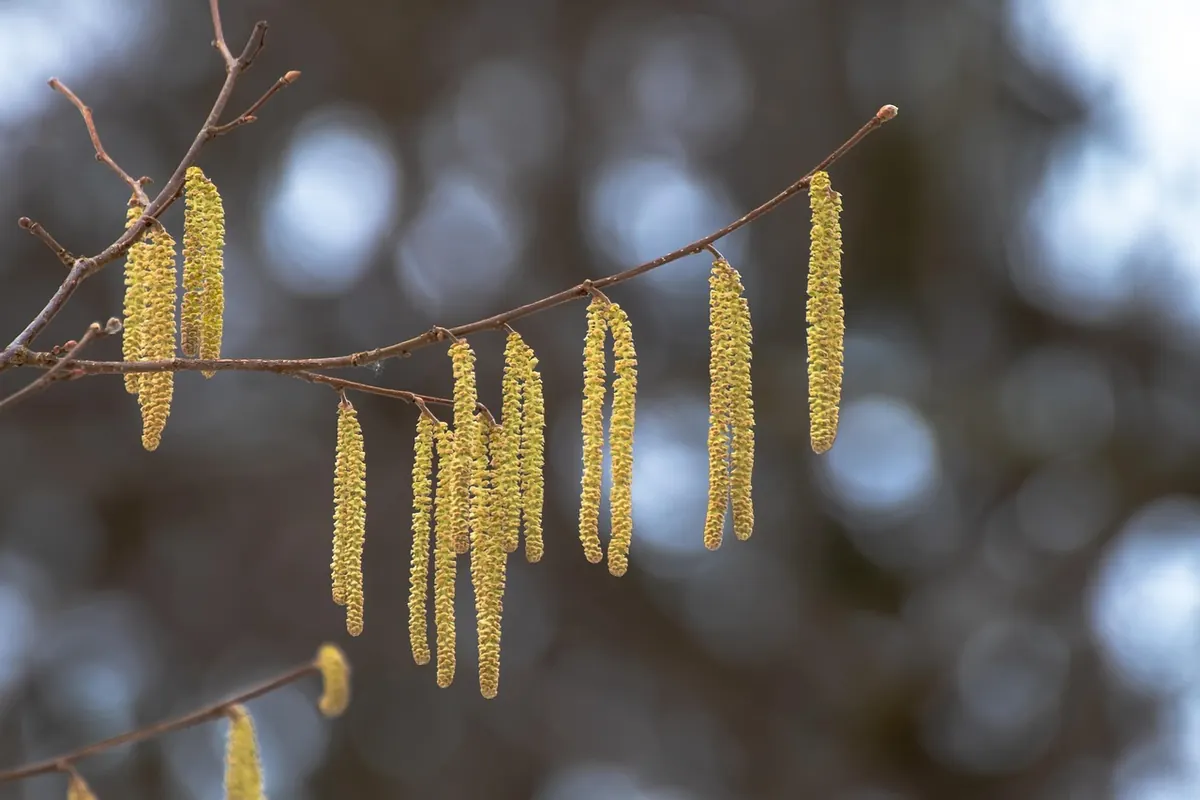
- Hazel catkins lengthening from tight grey-green lambs' tails into loose yellow ones. Note the day they first dust your sleeve with pollen.
- Alder catkins on wet ground, alongside its small purple-black buds held on short stalks — a good cue for ditches and stream edges.
- Ash buds swelling. Ash is one of the last to move, so its black opposite buds make a patient yardstick for the whole wood.
- Oak buds loosening — the clustered buds at the twig tip, sitting above the leaf scars. Watch for the first gap between scales.
- Beech bud scales sliding apart to show the pleated green inside. Long, slender, copper-brown, unmistakable once you've found one.
The one-tree trick
Choose a single accessible branch at eye height, photograph it from the same spot each visit, and describe it in three words. Tight. Swelling. Split. Over six weeks that sequence will teach you more about bud burst than any field guide, because it's your tree, in your weather, at your latitude.
Birdsong and Bird Behaviour: Cues 6 to 10
- Great tit's two-note song — the saw-sharpening teacher-teacher that often opens the season before anything else does.
- First chiffchaff, then count the singers on your route each visit and note whether the number climbs.
- Blackcap and willow warbler — the blackcap's hurried fluting, the willow warbler's soft descending phrase, arriving later than you expect.
- Drumming woodpecker, plus the first sight of a bird carrying moss, hair or mud towards a hole.
- Territorial chases and birdsong from the topmost twig — mistle thrushes and song thrushes singing into wind are worth a line of their own.
Write the time of day next to the first song of each species. Spring shifts the dawn chorus earlier week by week, and a record of that drift is one of the quiet pleasures of keeping a journal. Note too the birds that go silent: the flocks of fieldfare and redwing that were everywhere in February simply leave, and the absence is data.
Insects and Invertebrates: Cues 11 to 15
- Queen bumblebees flying low and zigzagging over the ground, hunting for nest sites among tussocks and old mouse holes.
- First butterfly — usually a brimstone, that pale lemon flick over the hedge line. Note species, time and whether it stopped to feed.
- Orange-tip along the hedge, plus peacocks and small tortoiseshells sunning on leaf litter or a warm trunk.
- Bee-flies hovering over bare earth and the first hoverflies over blossom; both are reliable early cues.
- Ground life under a log or stone — woodlice, centipedes, beetles — and the first ants moving on a sunny bank.
Turn one log, look, and put it back exactly as it was. Keep handling brief and skip nest holes and hollow trees altogether; a record of a disturbed nest is worth less than an undisturbed one.
Leaf-Out and Ground Cover: Cues 16 to 20
- Wood anemone in flower — a plant of old woodland, and a clean marker of ground-layer spring.
- Dog's mercury greening the shaded floor in patches, well before most canopy trees commit.
- Bluebell spikes rising, then colouring from the base upwards. Note the first fully open flower, not the first bud.
- Wild garlic leaves in damp shade, then the white star flowers. If you're unsure of the plant, crush a leaf and smell it.
- Leaf-out percentage. Stand in the same spot, look up, and estimate how much of the sky the canopy covers: 0, 25, 50, 75, closed.
That last cue is the one people forget and later wish they'd kept. The leaf-out clock is the spine of a spring journal — it tells you when the wood stopped being a place of light and became a green room. Add a sketch of the canopy outline every fortnight if you like drawing; a rough one is enough.
Weather, Light and Water: Cues 21 to 25
- Last frost. Note ground frost in hollows and shaded rides long after the open field has warmed. Cold air pools; your lowest point will be colder than the car park.
- Soil temperature and feel — push a finger in to the second knuckle, and record whether it's cold, cool or genuinely warm. Earthworm casts are a good companion note.
- Water levels and mud. Stream height, standing puddles, the first drying of a path, and frogspawn in ponds and ruts.
- Wind direction and strength, and what it carries: new scents of sap and soil, the smell of rain coming, sound travelling further on a still morning.
- Light. Time of sunset on your visits, the angle of sun on the rides, how far shadow has retreated — and note the old saying about oak and ash if you hear it, as folklore rather than forecast.
Weather notes are what turn a list of sightings into a record you can argue with. If the chiffchaff arrived the same week as a warm southerly and a week earlier than last year, that's a real observation, made by you, in a place you know.
Keeping Notes You'll Actually Re-read
Finish each visit with five minutes in the car or on a bench, while the wood is still in your ears. Write what surprised you. Add one drawing, however crude — a bud, a footprint, a line of hedge. Date the page in the margin so you can flip through a season at a glance.
Once a month, read the whole thing over and write a short summary at the back: what came early, what came late, what you missed entirely. That last category is the most useful, because it tells you what to watch for next spring. Keep the notebook somewhere you'll see it, and photograph the pages you'd hate to lose.
None of this needs to be perfect. Twenty-five cues, one wood, one pencil. The checklist is only there to keep your eyes moving — from the twig in your hand to the canopy overhead, from the bee at your feet to the wind in your face. Do that often enough and spring stops being a season you notice and becomes one you can read.
Photo: birgl / Pixabay
Related posts
More stories you’ll love reading